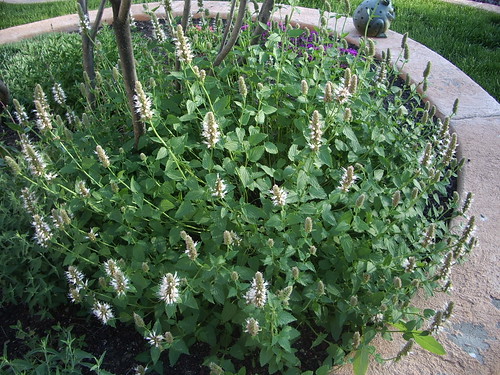
Agastache cana x rupistris GS246.1
"Hybrid Texas Hummingbird Mint"
Dimensions: 36"H x 36"W
Sun Exposure: Full Sun.
Cold Hardiness: USDA zones 9-6 ( -10 F )
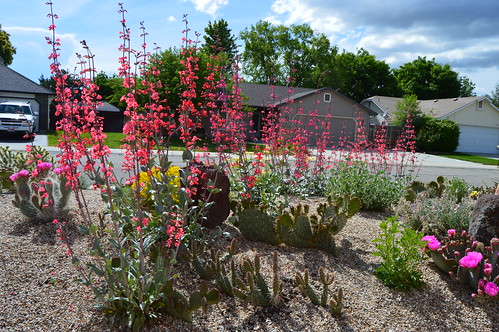
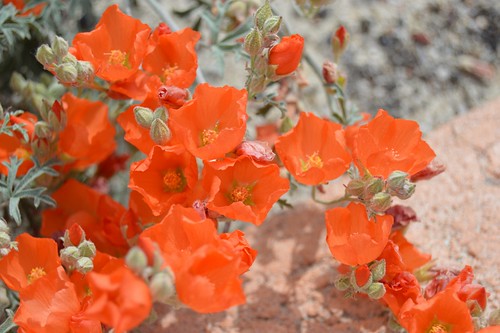
Flowers: Multicolored pink and orange, beginning in mid to late Spring until frost.
Soil Type: Loam ( 1 part loam to 1 part fine sand ).
Site: Slightly elevated to flat. Open areas or near South facing side of structures.
Watering: Damp to moist. Within 3 feet of a drip line. Water twice weekly during the heat of Summer. Though plants are drought resistant, they will go dormant if not given supplementary water during hot, dry weather.
Pollinators: Hummingbirds, Hawk Moths, & Bees.
Growth Rate: Root crowns grow up to 8 inches per year and mature at 36-48" across.
Maintenance: Plants die back to the root crown during the Winter and re-sprout in the Spring. Keep the overhead foliage in place until early Spring to help over-winter and provide seed for hungry birds.
Invasive Properties: Medium to low. Plants are heavy seeders in the garden and can spread into open, sandy areas if their near a water source or have adequate rainfall to survive the Summer heat.
Traditional, Culinary, or Medicinal Properties: Both flowers and foliage are edible and have many uses in the kitchen as a fresh or dried herb. The leaves have a sugary sweet scent, often described as "bubble gum". Use the same as you would Tarragon.
Native Habitat: Garden origin. The natural form is native to West Texas and SE New Mexico.
Comments: Though I've grown both the Agastache cana and rupistris for years, their hybrid crosses produce some neat, multi-colored effects. Seeds are collected from purple flowering plants with some plants producing almost half purple and half orange characteristics.
Buying options: Plants ( available at nursery only ) grown in 4 inch pots for $2.00 each. Seed: 100 seeds for $3.00. Sowing instructions: Sow indoors ( in seed starting mix ) or outdoors in early Spring, on the surface and cover with 1/4" perlite ( indoors ) or up to 1/2" peat moss outdoors and keep moist. Seeds germinate between 65 and 85 degrees F and normally sprout within 4-6 weeks.
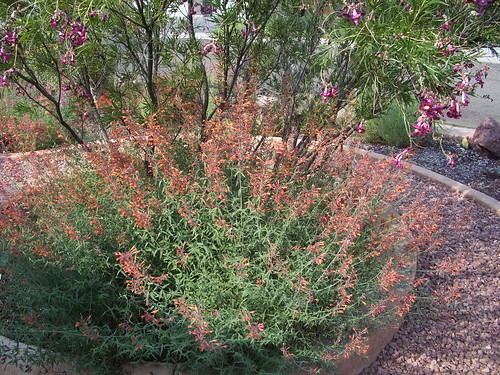
Agastache rupistris x cana GS246.2
"Hybrid New Mexico Hummingbird Mint"
Dimensions: 36"H x 36"W
Sun Exposure: Full Sun.
Cold Hardiness: USDA zones 9-6 ( -10 F )
Flowers: Multicolored orange and pink, beginning in mid to late Spring until frost.
Soil Type: Loam ( 1 part loam to 1 part fine sand ).
Site: Slightly elevated to flat. Open areas or near South facing side of structures.
Watering: Damp to moist. Within 3 feet of a drip line. Water twice weekly during the heat of Summer. Though plants are drought resistant, they will go dormant if not given supplementary water during hot, dry weather.
Pollinators: Hummingbirds, Hawk Moths, & Bees.
Growth Rate: Root crowns grow up to 8 inches per year and mature at 36-48" across.
Maintenance: Plants die back to the root crown during the Winter and re-sprout in the Spring. Keep the overhead foliage in place until early Spring to help over-winter and provide seed for hungry birds.
Invasive Properties: Medium to low. Plants are heavy seeders in the garden and can spread into open, sandy areas if their near a water source or have adequate rainfall to survive the Summer heat.
Traditional, Culinary, or Medicinal Properties: Both flowers and foliage are edible and have many uses in the kitchen as a fresh or dried herb. The leaves have a sweet, licorice scent and flavor. Use as you would Tarragon.
Native Habitat: Garden origin. The natural form is native to New Mexico and Arizona.
Comments: Though I've grown both the Agastache cana and rupistris for years, their hybrid crosses produce some neat, multi-colored effects. Seeds are collected from the orange flowered plants with some seedlings producing almost half orange and half pink characteristics.
Buying options: Plants ( available at nursery only ) grown in 4 inch pots for $2.00 each. Seed: 100 seeds for $3.00. Sowing instructions: Sow indoors ( in seed starting mix ) or outdoors in early Spring, on the surface and cover with 1/4" perlite ( indoors ) or up to 1/2" peat moss outdoors and keep moist. Seeds germinate between 65 and 85 degrees F and normally sprout within 4-6 weeks.
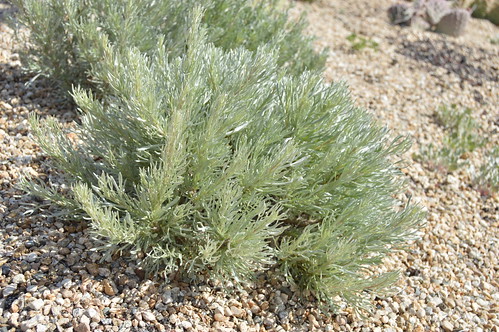
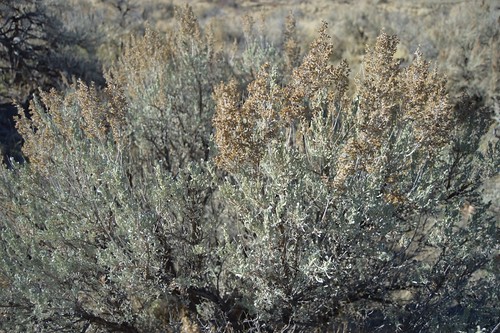
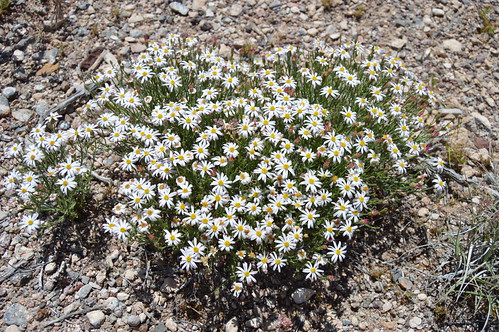
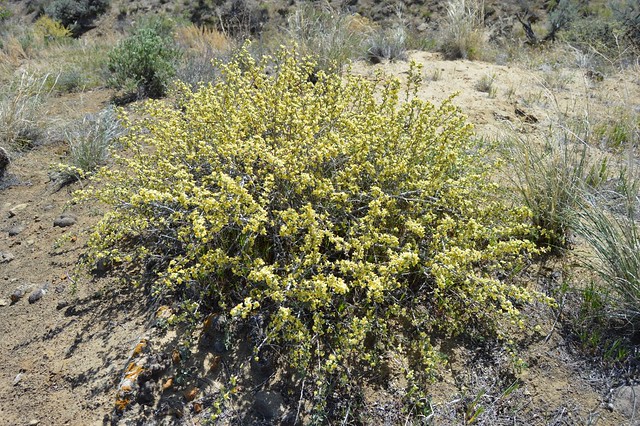
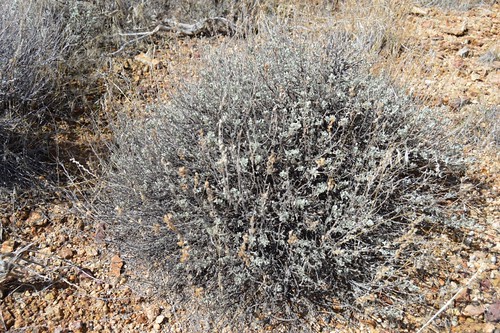
Artemisia rigida GS247.1
"Stiff sage", "Scabland sage"
Dimensions: 24" H x 36" W.
Sun Exposure: Full Sun.
Cold Hardiness: USDA Zones 9-4 ( -30 F )
Flowers: Dull yellowish gray on short spikes above the foliage in late Summer into Fall.
Soil Type: Sandy ( 5 parts fine sand to 1 part loam )
Site: Slightly elevated to flat. East, South, or West facing open areas.
Watering: Water only to establish the first year. Dry completely between watering.
Pollinators: Species of Artemisia are wind pollinated.
Growth Rate: Up to 6 inches per year.
Maintenance: Prune to shape in early Spring.
Invasive Properties: Medium to low. Plants seed heavily and can spread into open, sandy areas if their near a water source or have adequate Summer rainfall to survive the heat of Summer.
Traditional, Culinary or Medicinal Properties: None recorded.
Native Habitat: Low lying arid regions of Washington, Oregon, Idaho, and Western Montana.
Comments: This is one of the best Desert sages for the rock garden with it's relatively small stature. A great bonsai subject and a great host plant for Indian Paintbrush ( Castilleja - see next plant below ).
Buying Options: Seed Only: 50 seeds for $3.00. Sowing instructions: Sow outdoors only or in a cold frame in late Winter to early Spring at a depth of 1/4" and cover with an additional 1/4" peat moss, and keep damp to moist. Seeds germinate between 50-65 F and normally germinate within 4-6 weeks.
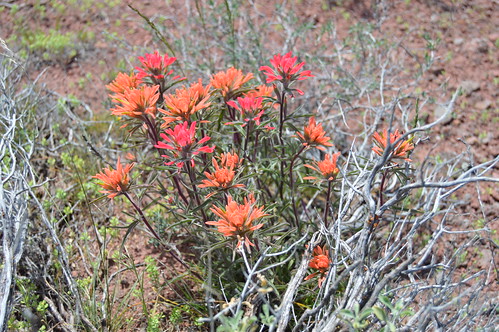
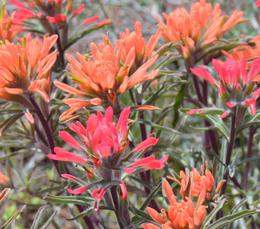
Castilleja angustifolia GS250.1
"Indian Paintbrush"
Dimensions: 12" H x 12" W
Sun Exposure: Full Sun
Cold Hardiness: USDA Zones 9-4 ( -30 F)
Flowers: Variable, red to orange to pink.
Soil Type: Sandy ( 5 parts fine sand to 1 part loam )
Site: Slightly elevated to flat. East, South or West facing open areas. Plants are parasitic and need to be placed near other Desert plants in order to thrive. Suggested pairings with other plants from this page include Stiff Sage ( Artemisia rigida ) , Buckwheats ( Eriogonum sp.), Penstemon acuminatus, and Salvia dorrii.
Watering: Dry to damp. Plants normally go dormant by mid to late Summer, so supplementary watering is not necessary unless the Spring is abnormally dry, in which case dry completely between watering.
Pollinators: Hummingbirds, Hawk Moths, and Bees.
Growth Rate: Root crowns can spread up to 4 inches per year.
Maintenance: Cut back dried foliage in early Fall or Spring.
Invasive Properties: Low to none.
Traditional, Culinary or Medicinal Properties: None recorded.
Native Habitat: USA - Western states, primarily West of the Continental Divide.
Comments: This is the low Desert form ( = Castilleja chromosa ) with most having red to orange colors with an occasional pink flowered plant.
Buying Options: Seed only: 50 seeds for $3.00. Sowing instructions: Sow outdoors only or in a cold frame in late Winter to early Spring, at a depth of 1/4" and cover with additional 1/4" peat moss and keep damp to moist. Since this plant is parasitic in nature ( it will not kill it's host plant ), plant seeds near the base of an existing plant ( see suggested plants under "Site" ) or mix the seeds with other Desert seed when planting. Seeds germinate between 50-65 F and usually germinate in 4-6 weeks.
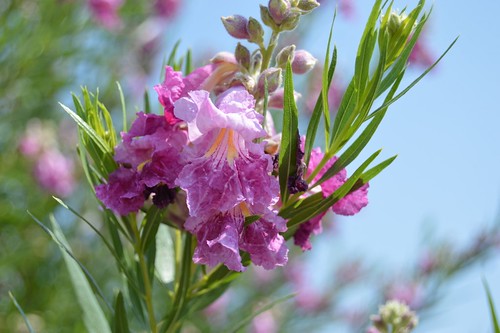
Chilopsis linearis GS251.1
"Desert Willow"
Dimensions: 180"H x 96" W
Sun Exposure: Full Sun
Cold Hardiness: USDA Zones 9-6 ( -10 F )
Flowers: In clusters at the end of new growth stems. Fragrant pink to burgundy with yellow throats, up to three inches across, freely from early Summer to frost.
Soil Type: Loam ( 1 part loam to 1 part fine sand )
Site: Slightly elevated to flat. Open areas or near South facing sides of structures. Established plants can be water sensitive so plant at least 10 feet away from any permanent water source or overspray area.
Watering: Keep dry to damp. Within 6 feet of a drip line. Water regularly the fist 1 to 2 years to establish, after which watering bi-weekly is necessary during the heat of Summer to maintain continuous flowering.
Pollinators: Hummingbirds, Hawk Moths, and Bees.
Growth Rate: Up to 36 inches per year in young plants. As plants mature the rate slows to as little as 4 inches per year.
Maintenance: Prune back in early Spring to shape. Plants can be topped to emphasize a large bush or the lower branches trimmed to emphasize a small tree effect. Fertilize with an organic, slow release formula, rich in potassium ( 5-7-4 is standard ) at the time of pruning to maximize flowering.
Invasive Properties: Medium to low. Plants are heavy seeders and can spread into open, sandy areas if they have a water source or adequate Summer rainfall to survive the Summer heat.
Traditional, Culinary, or Medicinal Properties: None recorded.
Native Habitat: Widespread in Northern Mexico and the SW USA from Texas to California.
Comments: One of the most popular plants in the Southwestern garden and very popular with Hummingbirds.
Plants thrive in the Summer heat and are the last tree to bud out in the Spring, usually taking two to three weeks of 70 F plus weather to shake them out of their Winter dormancy.
Buying Options: Seed only. 50 seeds for $3.00. Sowing instructions: Sow indoors ( in seed starting mix ) or outdoors in early Spring, at a depth of 1/2" and cover with 1/4" perlite ( indoors ) or up to 1/2" peat moss outdoors and keep moist. Seeds germinate between 65 and 85 degrees F and normally sprout within 4-6 weeks. Note: for Zone 6, small seedlings can be lost in Winter cold, so it's advisable to grow your seedlings in 5 gallon containers the first 1 to 2 years ( to be taken indoors in Winter ) before planting in the ground.
Chilopsis linearis GS251.2
"Mojave Desert Willow"
Comments: All descriptions as above. This is the Mojave Desert form with nearly white flowers.
Buying Options: Seed only. 20 seeds for $3.00. Sowing instructions: Sow indoors ( in seed starting mix ) or outdoors in early Spring, at a depth of 1/2" and cover with 1/4" perlite ( indoors ) or up to 1/2" peat moss outdoors and keep moist. Seeds germinate between 65 and 85 degrees F and normally sprout within 4-6 weeks. Note: for Zone 6, small seedlings can be lost in Winter cold, so it's advisable to grow your seedlings in 5 gallon containers the first 1 to 2 years ( to be taken indoors in Winter ) before planting in the ground.
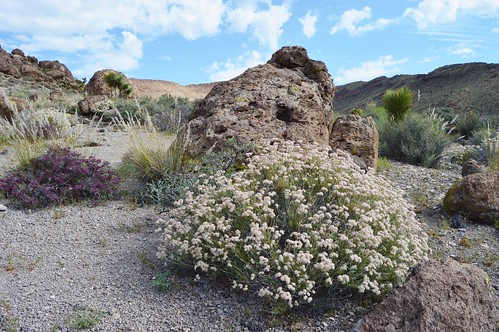
Eriogonum caespitosum GS258
"Matted Desert Buckwheat"
Dimensions: 4"H x 12"W
Sun Exposure: Full Sun.
Cold Hardiness: USDA Zones 9-4 ( -30 F )
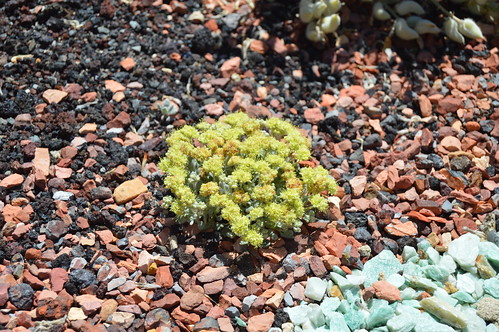
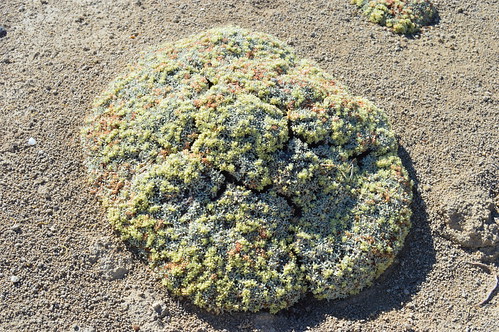
Flowers: Greenish yellow poms, fading to red and yellow, up to 1/2" in diameter, are held within, or up to 4 inches above the dense mats in Mid to late Spring.
Soil Type: Sandy ( 5 parts fine sand to 1 part loam )
Site: Elevated ( mounded ) to sloping position. East, South, or West facing open areas.
Watering: Keep dry to damp. Water regularly to establish, drying completely between watering. Watering is optional on established plants as they are super drought hardy, however flowering can be extended with supplementary watering into early Summer and reappearing in Fall.
Pollinators: Butterflies and Bees
Growth Rate: Up to 3 inches per year.
Maintenance: Remove dried flowers, otherwise plants are virtually maintenance free.
Invasive Properties: Low to none.
Traditional, Culinary, or Medicinal Properties: None recorded.
Native Habitat: Widespread in the intermountain West, USA
Comments: Plants are excellent companions in the rock garden with cactus and succulents.
Buying Options: Seed Only. 50 seeds for $4.00. Sowing Instructions: Sow outdoors only, or in a cold frame, in loose, sandy, fast draining soil in late Winter to early Spring, at a depth of 1/4" inch and cover with an additional 1/4" peat moss and keep moist. Seeds germinate in cool weather between 50 and 65 F and normally sprout within 4-6 weeks.
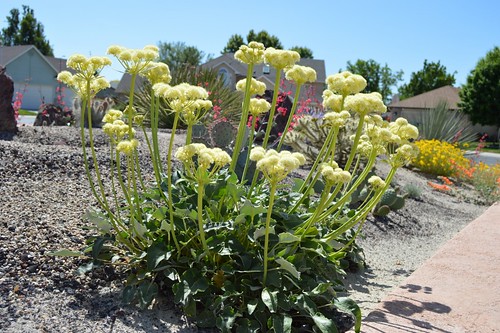
Eriogonum compositum GS259
"Arrow leaf Buckwheat"
Dimensions: 15" H ( with flowers ) x 36" W
Sun Exposure: Full Sun
Cold Hardiness: USDA Zones 9-4 ( -30 F )
Flowers: Large, branching heads, up to 6 inches across, lemon yellow, appearing in early to late Spring.
Soil Type: Coarse - Sandy ( 3 parts fine sand, 1 part crushed gravel or volcanic cinder, 1/2 part loam ).
Site: Elevated to sloping position. East, South or West facing open areas.
Watering: Water only to establish, drying completely between watering. Established plants have excellent drought tolerance.
Pollinators: Butterflies and Bees.
Growth Rate: Up to 4 inches per year.
Maintenance: Remove dried flowers, otherwise plants are virtually maintenance free.
Invasive Properties: Low to none.
Traditional, Culinary, or Medicinal Properties: None recorded.
Native Habitat: A narrow band extending from Southern British Columbia, Canada to Northern California, USA
Comments: One of, if not the, largest of the mat forming buckwheats. Plants love to grow on steep, rocky hillsides in full, blazing sun. The flowers are also super sized by buckwheat standards. Rarely offered.
Buying Options: Seed only. 20 seeds for $3.00. Sowing instructions: Sow outdoors only, or in a cold frame, in loose, sandy, fast draining soil in late Winter to early Spring, at a depth of 1/4" inch and cover with an additional 1/4" peat moss and keep damp to moist. Seeds germinate in cool weather between 50 and 65 F and normally sprout within 4-6 weeks.
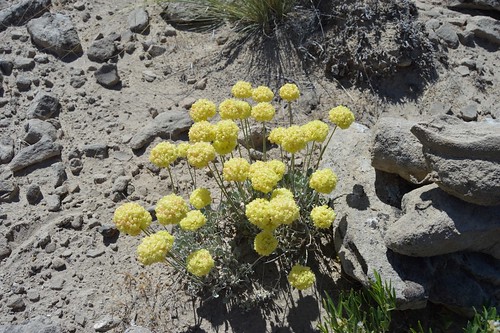
Eriogonum ovaliforme GS260.4
"Cushion Desert Buckwheat"
Dimensions: 10" H ( with flowers ) x 12" W
Sun Exposure: Full Sun.
Cold Hardiness: USDA Zones 9-4 ( -30 F )
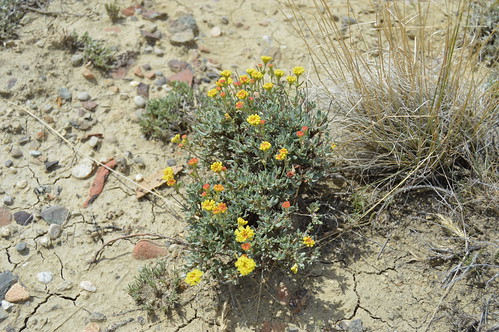
Flowers: This form with creamy yellow to deep yellow poms, up to 1/2" across, appearing in mid to late Spring and into early Summer.
Soil Type: Sandy ( 5 parts fine sand to 1 part loam )
Site: Elevated to sloping position. East, South, or West facing open areas.
Watering: Water only to establish the first year, after which no watering is necessary. Only natural rainfall.
Pollinators: Butterflies and Bees.
Growth Rate: Mats spread up to three inches per year.
Maintenance: Remove dried flower spikes. Otherwise plants are virtually maintenance free.
Invasive Properties: Medium to low. Plants can spread into open, sandy areas.
Traditional, Culinary or Medicinal Properties: None recorded.
Native Habitat: Widespread in the Western USA into Southern Canada.
Comments: This form is destined to be a favorite in the rock garden and will pair up well with red or pink flowered cactus and succulents as well as perennial favorites Indian Paintbrush ( Castilleja ), Penstemon, and Salvia dorrii.
Buying Options: Seed only. 50 seeds for $3.00. Sowing instructions:Sow outdoors only, or in a cold frame, in seed starting mix in late Winter to early Spring, at a depth of 1/4" inch and cover with an additional 1/4" peat moss and keep damp to moist. Seeds germinate in cool weather between 50 and 65 F and normally sprout within 4-6 weeks.
Eriogonum sphaerocephalum GS262
"Rock Buckwheat"
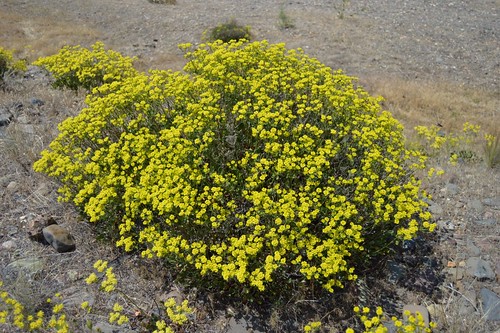
Dimensions: 24" H x 24" W, Plants form small, rounded bushes.
Sun Exposure: Full Sun.
Cold Hardiness: USDA Zones 9-4 ( -30 F )
Flowers: Bright lemon yellow on short umbels above the foliage, up to two inches across in mid Spring to early Summer.
Soil Type: Sandy ( 5 parts fine sand to 1 part loam )
Site: Elevated to sloping position. East, South, or West facing open areas.
Watering: Water only to establish the first year, drying completely between watering, after which no watering is necessary. Only natural rainfall.
Pollinators: Butterflies and Bees.
Growth Rate: Up to 4 inches per year.
Maintenance: Prune to shape. Plants are virtually maintenance free.
Invasive Properties: Medium to low. Plants can spread by seed into open, sandy areas.
Traditional, Culinary or Medicinal Properties: None recorded.
Native Habitat: USA, A relatively narrow band from Washington state into Northern California.
Comments: Another great buckwheat species for the rock garden. Rarely offered.
Buying Options: Seed only. 50 seeds for $4.00 . Sowing instructions: Sow outdoors only, or in a cold frame, in seed starting mix in late Winter to early Spring, at a depth of 1/4" inch and cover with an additional 1/4" peat moss and keep damp to moist. Seeds germinate in cool weather between 50 and 65 F and normally sprout within 4-6 weeks.
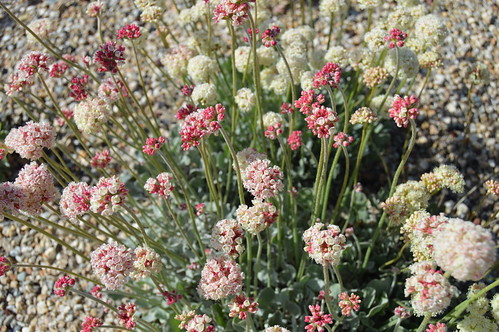
Eriogonum thymoides GS263
"Thymeleaf Buckwheat"
Dimensions: 12" H x 12" W, Plants form small, rounded shrubs.
Sun Exposure: Full Sun.
Cold Hardiness: USDA Zones 9-4 ( -30 F )
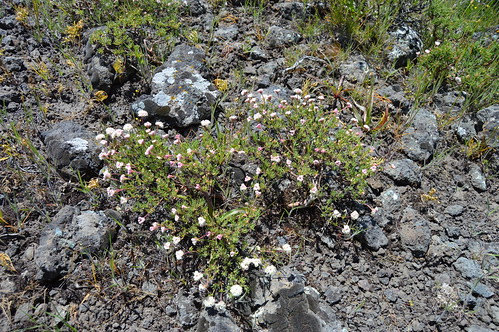
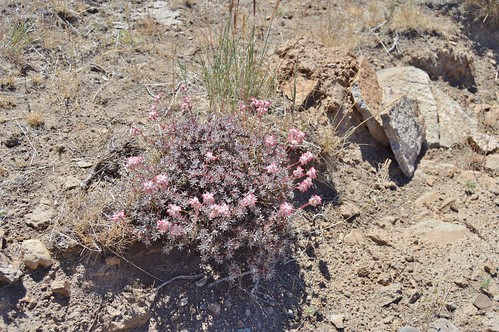
Flowers: Pinkish red in bud, lemon yellow in flower, then fading to yellowish red, on short poms above the dense foliage in mid to late Spring.
Soil Type: Sandy ( 5 parts sand to 1 part loam )
Site: Elevated to sloping position. East, South, or West facing open areas.
Watering: Keep dry to damp. Water only to establish the first year, after which no watering is necessary. Only natural rainfall.
Pollinators: Butterflies and Bees.
Growth Rate: Up to 2 inches per year.
Maintenance: Prune to shape. Plants are virtually maintenance free.
Invasive Properties: Medium to low. Plants can spread by seed into open, sandy areas.
Traditional, Culinary or Medicinal Properties: None recorded.
Native Habitat: USA, Pacific Northwest states of Washington, Oregon, and Idaho in arid, rocky terrain.
Comments: This buckwheat is a natural bonsai subject and the colorful flowers go through many phases of color as they mature. One of the best.
Buying Options: Seed only. 50 seeds for $4.00. Sowing instructions: Sow outdoors only, or in a cold frame, in seed starting mix in late Winter to early Spring, at a depth of 1/4" inch and cover with an additional 1/4" peat moss and keep damp to moist. Seeds germinate in cool weather between 50 and 65 F and normally sprout within 4-6 weeks.
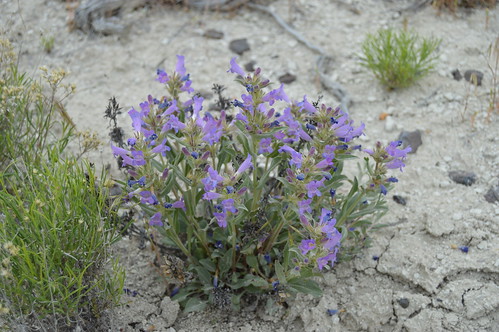
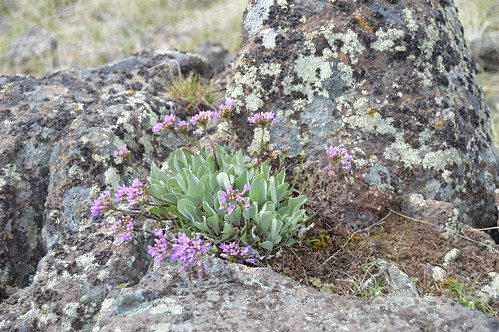
Penstemon acuminatus GS275
"Sand Dune Penstemon", "Sharpleaf Penstemon"
Dimensions: 24" H x 18" W
Sun Exposure: Full Sun.
Cold Hardiness: USDA Zones 9-4 ( -30 F )
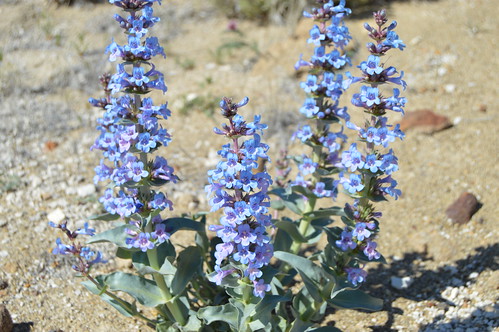
Flowers: Primarily light blue, occasionally with dark blue or with purple or pinkish tints, up to two or more feet above the foliage from mid Spring to early Summer.
Soil Type: Sandy ( 5 parts fine sand to 1 part loam )
Site: Elevated to sloping position. East, South, or West facing open areas.
Watering: Keep dry to damp. Water only to establish the first year, after which no watering is necessary. Only natural rainfall.
Pollinators: Hummingbirds, Moths, and Bees.
Growth Rate: Root crowns spread up to 3 inches per year.
Maintenance: Prune back flower spikes when dry to prevent over seeding in late Summer or early Spring.
Invasive Properties: Medium. Plants are heavy seeders and can spread into open, sandy areas.
Traditional, Culinary or Medicinal Properties: None recorded.
Native Habitat: USA, Washington, Oregon, Idaho, and Nevada.
Comments: Plants thrive in deep sand and hot, blazing sun. Duration is about 7-10 years. One of the best for the rock garden. Excellent drought resistance.
Buying Options: Seed only. 100 seeds for $3.00. Sowing instructions: Sow outdoors only or in a cold frame, late Winter to early Spring, in seed starting soil mix, at a depth of 1/4', and an additional 1/4" covering of peat moss, and keep damp to moist. Seeds germinate between 50-65 F and can take up to 6 weeks to sprout.
Penstemon deustus GS277.1
"Hot Rock Penstemon", Scabland Penstemon"
Dimensions: 24" H x 18" W
Sun Exposure: Full Sun
Cold Hardiness: USDA Zones 9-4 ( -30 F )
Flowers: This form with pure white flowers on spikes up to two feet above the foliage in mid Spring to early Summer.
Soil Type: Sandy ( 5 parts sand to 1 part loam )
Site: Elevated to sloping. East, South, or West facing open areas.
Watering: Keep dry to damp. Water only to establish the first year, after which no watering is necessary. Only natural rainfall.
Pollinators: Hummingbirds, Hawk Moths, and Bees.
Growth Rate: Root crowns grow up to three inches per year.
Maintenance: Prune back dried flower spikes in late Summer ( if you want to prevent overseeding ) or early Spring ( if you wish to allow new seedlings to sprout ).
Invasive Properties: Medium to low. Plants can spread by seed into open, sandy areas.
Traditional, Culinary or Medicinal Properties: None recorded.
Native Habitat: USA, Northwestern States.
Comments: Plants grow in rocky, arid sites in full sun and are well suited in the rock garden.
Buying Options: Seed only. 100 seeds for $4.00. Sowing instructions: Sow outdoors only or in a cold frame in late Winter to early Spring, in seed starting soil mix, at a depth of 1/4', and an additional 1/4" covering of peat moss, and keep damp to moist. Seeds germinate between 50-65 F and can take up to 6 weeks to sprout.
Penstemon superbus GS286
"Superb Penstemon"
Dimensions: 48" H x 24"W
Sun Exposure: Full Sun
Cold Hardiness: USDA Zones 9-6 ( -10 F )
Flowers: Bright coral pink to red, on tall Spikes up to 4 feet from early Spring to late Summer.
Soil Type: Loam ( 1 part loam to 1 part fine sand )
Site: Sloped to flat. East, South, or West facing open or enclosed areas near structures or amongst other plants.
Watering: Keep damp to moist. Within 4 feet of a drip line and water weekly during the heat of Summer.
Pollinators: Hummingbirds, Hawk Moths, and Bees.
Growth Rate: Root crowns spread up to 10 inches per year.
Maintenance: This Penstemon has a long flowering period and the flower spikes can become top heavy. Prune back as they begin to lean over or tie off with bamboo stakes. To avoid over seeding, clip off spikes as they go to seed in late Summer, or wait until Spring if you need new seedlings.
Invasive Properties: Medium. Plants can spread by seed into open, disturbed areas.
Traditional, Culinary or Medicinal Properties: None recorded.
Native Habitat: USA, SE Arizona and SW New Mexico.
Comments: This is my favorite Penstemon for attracting Hummingbirds during the Spring months, a full month before the Salvia's and Agastache's come into bloom. The flower color and height of the spikes attract them like magnets. Plants are highly adaptable and tolerate heavier soils and more shade as long as the soil is fast draining, but do need supplementary water during the heat of Summer to maintain continuous flowering.
Duration is relatively short, only 2-3 years on average, however plants do seed heavily and sprout numerous seedlings which can be thinned out in early to mid Spring.
Buying Options: Plants ( available at nursery only ) grown in 4 inch pots for $2.00 each. Seed: 100 seeds for $3.00. Sowing instructions: Sow outdoors only or in a cold frame, late Winter to early Spring, in seed starting soil mix, at a depth of 1/4', and an additional 1/4" covering of peat moss, and keep damp to moist. Seeds germinate between 50-65 F and can take up to 6 weeks to sprout.
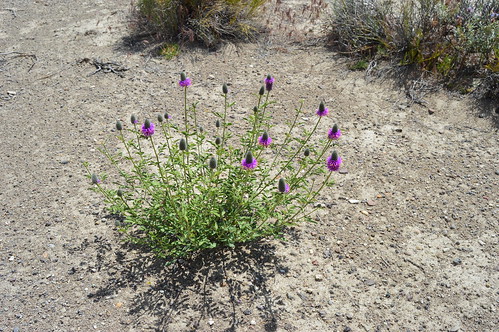
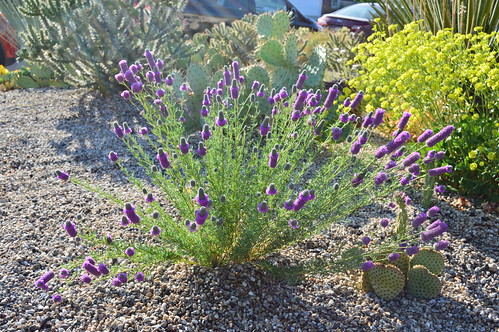
Salvia dorrii GS293.1
"Purple Sage"
Dimensions: 36" W x 48" W
Sun Exposure: Full Sun
Cold Hardiness: USDA Zones 9-5 ( -20 F )
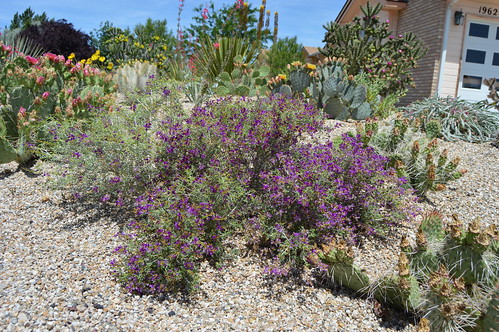
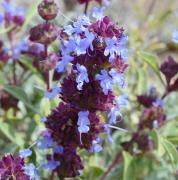
Flowers: This form with dark purple buds ( bracts ) and blue flowers on spikes up to 6 inches above the foliage in late Spring to early Summer.
Soil Type: Coarse - Sandy ( 3 parts fine sand, 1 part crushed gravel or volcanic cinder fines, 1/2 part loam )
Site: Elevated ( mounded ) position to 4 feet in diameter and, at least, 3 foot in height. Open areas.
Watering: Water only to establish the first year, drying completely between watering, after which no watering is necessary. Only natural rainfall.
Pollinators: Hummingbirds, Butterflies, Hawk Moths and Bees.
Growth Rate: Up to 5 inches per year.
Maintenance: Prune to shape in Fall or early Spring.
Invasive Properties: Low.
Traditional, Culinary or Medicinal Properties: One of the best sages for culinary use. Strongly aromatic leaves are excellent dry or fresh in meat and bean dishes. Use as you would traditional sage.
Native Habitat: USA, Widespread in the Western States in arid, sandy locations. This form collected in Southern Idaho.
Comments: This Desert sage has many uses in the rock garden. Besides it's beautiful shape and flowers, it's an excellent herb in the kitchen, and attracts a wide assortment of pollinators to it's flowers. Plants are water sensitive so it's important to plant in an elevated ( mounded ) position in a course, sandy soil mix and well away from any water sources no closer than 8 feet.
Buying Options: Seed only. 100 seeds for $4.00. Sowing instructions: Sow indoors or out, in seed starting mix, at a depth of 1/8 inch and cover with 1/4 inch pearlite ( indoors ) or peat moss ( outdoors ) and keep damp to moist in late Winter to early Spring. Seeds germinate between 65-85 F and take up to 4 weeks to sprout.
Salvia dorrii GS293.2
"Purple Sage"
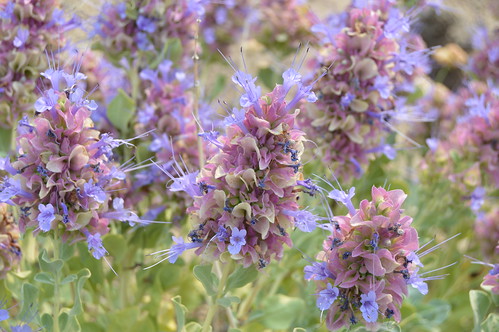
Comments: All descriptions as above. This form with pink buds ( bracts ) and blue flowers.
Buying Options: Seed only. 100 seeds for $4.00. Sowing instructions: Sow indoors or out, in seed starting mix, at a depth of 1/8 inch and cover with 1/4 inch perlite ( indoors ) or peat moss ( outdoors ) and keep damp to moist in late Winter to early Spring. Seeds germinate between 65-85 F and take up to 4 weeks to sprout.
Salvia dorrii GS293.3
"Purple Sage"
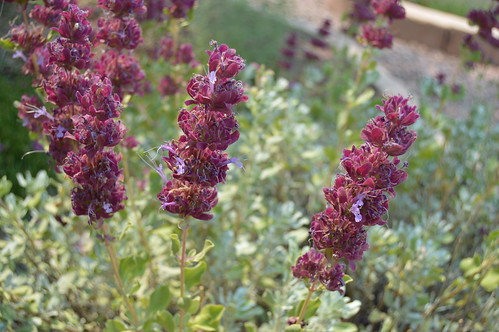
Comments: This form with purplish pink buds ( bracts ) and pink flowers. Very rare color!
Buying Options: Seed only. 50 seeds for $3.00. Sowing instructions: Sow indoors or out, in seed starting mix, at a depth of 1/8 inch and cover with 1/4 inch perlite ( indoors ) or peat moss ( outdoors ) and keep damp to moist in late Winter to early Spring. Seeds germinate between 65-85 F and take up to 4 weeks to sprout.
Salvia dorrii GS293.5
"Purple Sage"
Comments: This form with greenish yellow buds ( bracts ) and white flowers. Very rare color!
Buying Options: Seed only. 50 seeds for $3.00. Sowing instructions: Sow indoors or out, in seed starting mix, at a depth of 1/8 inch and cover with 1/4 inch perlite ( indoors ) or peat moss ( outdoors ) and keep damp to moist in late Winter to early Spring. Seeds germinate between 65-85 F and take up to 4 weeks to sprout.
Salvia dorrii GS293.7
"Purple Sage"
Comments: This form with greenish yellow buds ( bracts ) and blue flowers. Super rare color!
Buying Options: Seed only. 20 seeds for $3.00. Sowing instructions: Sow indoors or out, in seed starting mix, at a depth of 1/8 inch and cover with 1/4 inch perlite ( indoors ) or peat moss ( outdoors ) and keep damp to moist in late Winter to early Spring. Seeds germinate between 65-85 F and take up to 4 weeks to sprout.
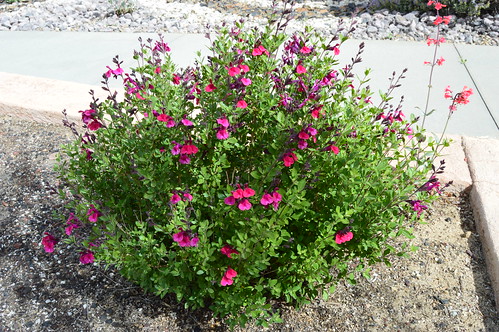
Salvia greggii GS294.1
"Autumn Sage"
Dimensions: 36" H x 36" W
Sun Exposure: Full Sun
Cold Hardiness: USDA Zones 9-6 ( -10 F ), For Zone 6, plant no later than mid Summer to over-winter successfully.
Flowers: Pinkish red to pink , up to 1/2" in diameter, on spikes up to 12 inches above the foliage beginning in mid to late Spring until the first hard frost of Fall.
Soil Type: Loam ( 1 part loam to 1 part fine sand )
Site: Sloping to flat. South to West facing open areas or near South side of structures.
Watering: Keep damp to moist. Within 4 feet of a drip line. Water weekly during the heat of Summer to maintain flowering.
Pollinators: Hummingbirds, Hawk Moths and Bees.
Growth Rate: Up to 18 inches per year.
Maintenance: Plants need an annual Spring pruning to maintain best shape and flowering vitality. Prune back to 12 inches above the ground as new growth begins to emerge. Fertilize with an organic, slow release formula, rich in phosphorus with a 5-7-4 rating for best results after pruning.
Invasive Properties: Medium to low.
Traditional, Culinary, or Medicinal Properties: Flowers and leaves are edible and can be used fresh or dried. Mild sage flavor. Flowers are delicate and sweet.
Native Habitat: USA, Texas in Edwards Plateau into Big Bend country.
Comments: Plants have multiple uses in the garden, from ornamental, to culinary, to attracting Hummingbirds. In addition they can tolerate richer soils and watering as long as the soil is fast draining.
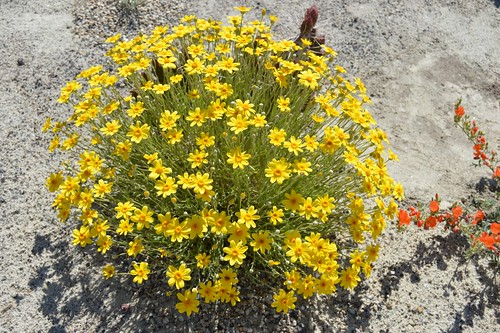
Buying Options: Plants ( available at nursery only ) grown in 4 inch pots for $2.00 each. Seed: 50 seeds for $3.00. Sowing instructions: Sow indoors or out in seed starting mix, at a depth of 1/4 inch, and cover with 1/4 inch perlite ( indoors ) or peat moss ( outdoors ) and keep damp to moist. Seeds germinate between 65 and 85 degrees F and take up to 4 weeks to sprout.
Salvia greggii - large form GS294.2
"Autumn Sage"
Comments: All descriptions as above, however this form is nearly twice as large in stature and the flowers tend to be more reddish in color with orange also being observed.
Buying Options: Plants ( available at nursery only ) grown in 4 inch pots for $2.00 each. Seed: 50 seeds for $3.00. Sowing instructions: Sow indoors or out in seed starting mix, at a depth of 1/4 inch, and cover with 1/4 inch perlite ( indoors ) or peat moss ( outdoors ) and keep damp to moist. Seeds germinate between 65 and 85 degrees F and take up to 4 weeks to sprout.
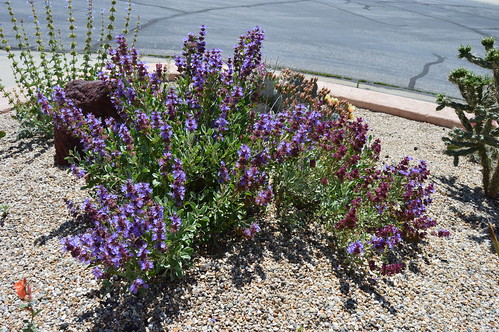
Salvia greggii - purple flowered form GS294.4
"Autumn Sage"
Comments: Originally found amongst a group of plants at Home Depot back in the late 90's, this form has over-wintered successfully here for many years. The size of the plants and flowering habit are identical. Certainly a hybrid whose parentage is lost in obscurity. Flowers range from light to dark purple, sometimes with a white "eye".
Buying Options: Plants ( available at nursery only ) grown in 4 inch pots for $2.00 each. Seed: 50 seeds for $3.00. Sowing instructions: Sow indoors or out in seed starting mix, at a depth of 1/4 inch, and cover with 1/4 inch perlite ( indoors ) or peat moss ( outdoors ) and keep damp to moist. Seeds germinate between 65 and 85 degrees F and take up to 4 weeks to sprout.