New for 2012, I've added plant categories like Cylindropuntia or Echinocereus to minimize repetitive information on individual listings. I've also modified the "Soil Type" entries to correspond to the latest updated formulas listed on the Introduction page. On that note, I recommend you read my article on how to design your Desert garden, also on the Introduction page. This past September I had a major computer crash, which has caused a significant delay in getting the website updated. In addition, I lost many of the pictures for the new plant entries...curses! I'll have to wait for this years bloom cycle to take new ones and, this time, I'll make sure to get them copied off. You'll see "Photo coming soon" on those lost pictures below.
Preserving Nature: No field collected plants are sold here. Only cuttings from garden cultivated plants or seedlings grown from garden or wild collected seeds from reputable sellers. In rare cases, I'll sell salvage plants from urban development projects, where the plants would have been destroyed otherwise. Preservation is my number one priority!
Buying tips:
When purchasing, a separate PayPal window will open as your shopping cart. I recommend keeping the window open ( do not close or push the "Return to shopping" button ), otherwise you'll have to push another buy button to view the cart. You do not have to have a PayPal account to purchase as it only handles the transaction. If you wish to buy the old fashioned way, via snail mail, that's ok too. Send me your list ( include the GS numbers ) and a check or money order made out to Geoscape. Only USA orders are accepted at this time.
Cactus plants
- $15 minimum order on all plant purchases.
- All prices include free UPS ground or USPS Parcial Post shipping. To upgrade your shipping method, click on the upgrade choices to the right. All cactus plants are shipped bare root and can last for weeks in a box with minimal effect, so I do recommend the most cost effective method. If your ordering from East of the Mississippi, I recommend the UPS upgrade. The USPS has choppy service when shipping from here to the Midwest or East coast destinations in rural areas, otherwise their service has been excellent to points westward.
- Occasionally I do have small quantities of certain plants not listed here. Send me an email at the above address to get the list. When I can cover the order request, I'll confirm it with you first and then have you use the generic price buttons below to place the order. Prices, in general, are based on the size of the plant, defined by the following:
4S = 4 inch pot, Smaller plant ( 1-2 inch tall or wide plant ) ..........
4L = 4 inch pot, Larger plant ( 2-3 inch tall or wide plant ) ..........
1G = 1 gallon size ( 3-5 inch tall or wide plant ) ..........
3G = 3 gallon size ( 5-8 inch tall or wide plant ) ..........
5G = 5 gallon size ( 8-12+ inch tall or wide plant ) ..........
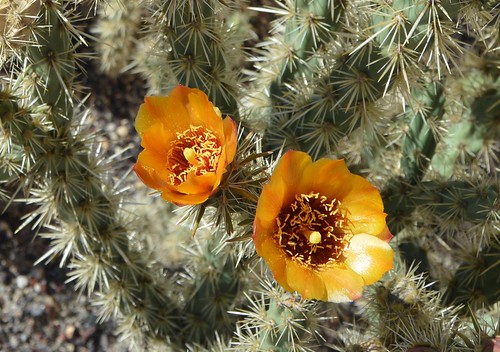
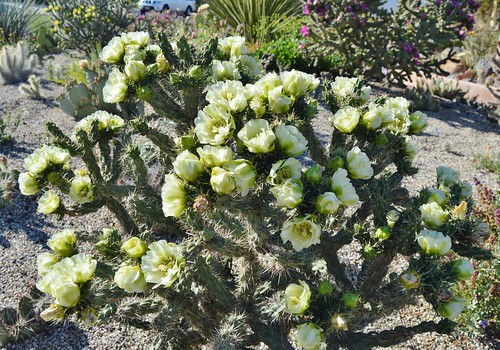
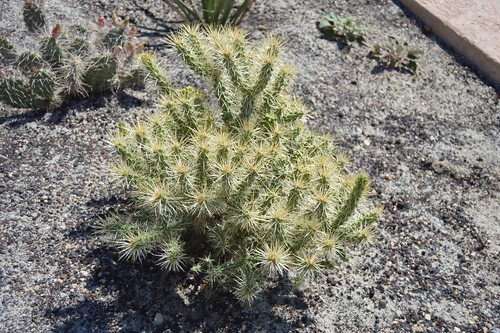
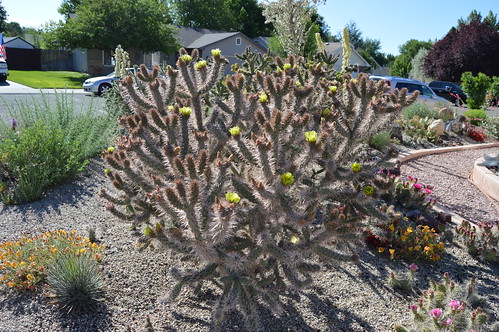
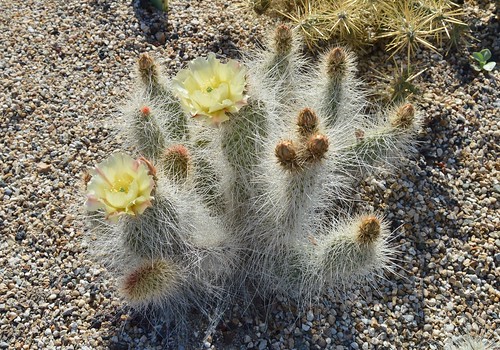
Cylindropuntia deserta GS106.2 ( Formerly listed as C. echinocarpa )
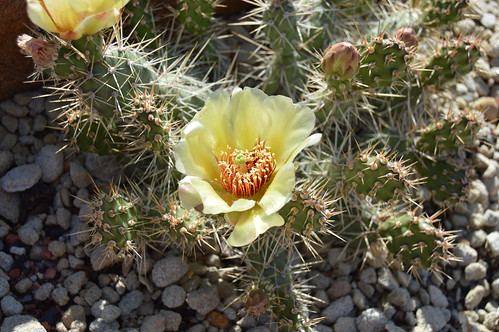
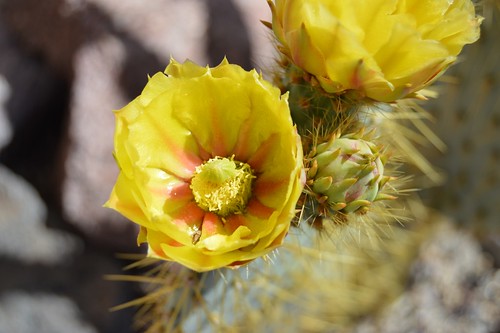
"Golden Cholla Cactus" Dimensions: 36"H x 48' W Cold Hardiness: USDA Zones 9-6 ( -10 F ) Flowers: Greenish yellow, up to 3" across, late Spring to early Summer. Growth Rate: Up to 4 vertical inches per year. Native Habitat: Southern Nevada.
Growers Comments: This low growing Cholla finally has it's own name after being included within C. echinocarpa for many years. The plants are beautiful, compact, golden spined bushes. Highly recommended.
Buying Options:Size 4L rooted stem cutting, shipped bare root, for $7.50 each.
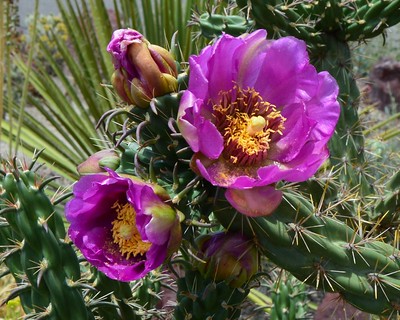
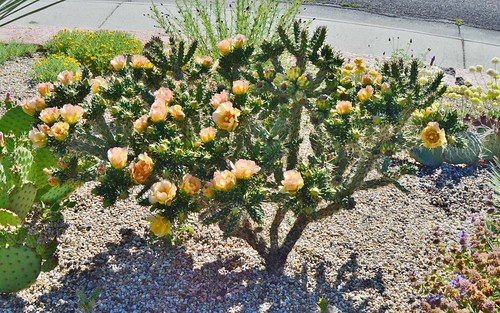
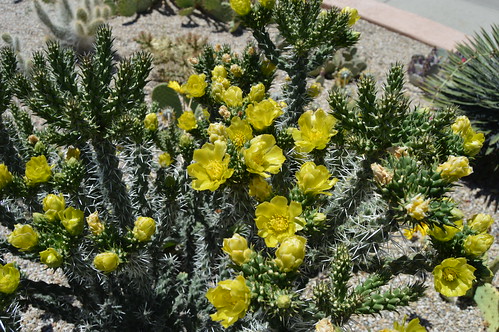
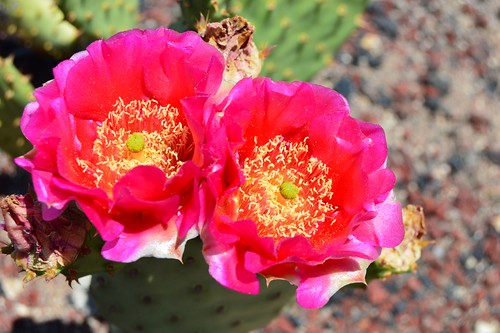
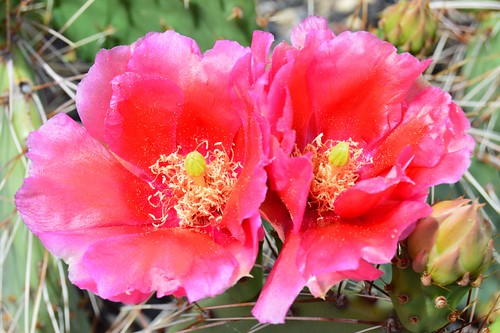
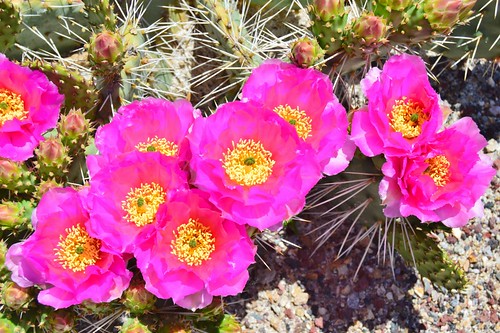
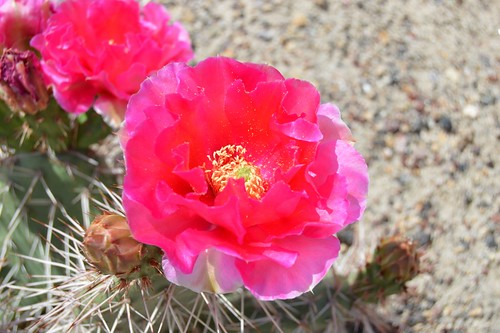
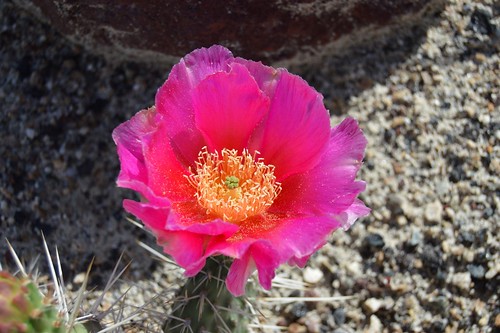
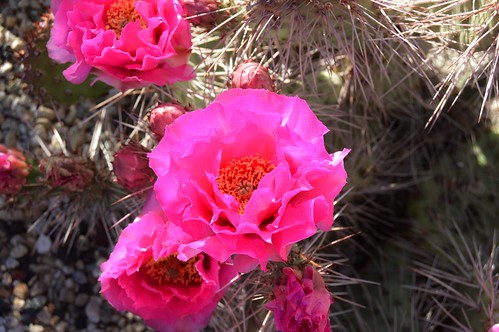
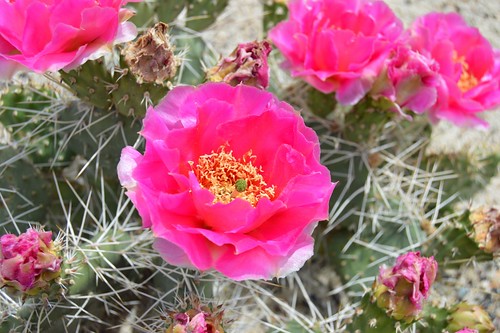
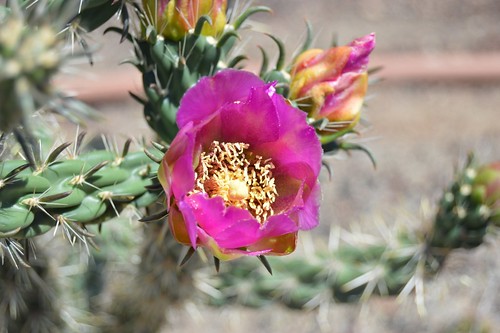
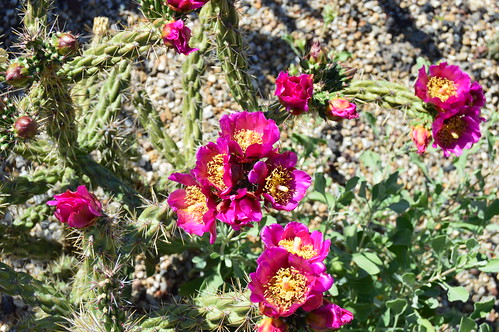
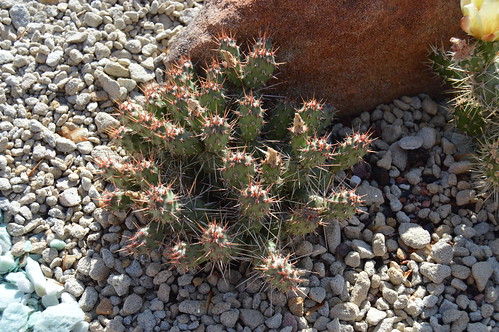
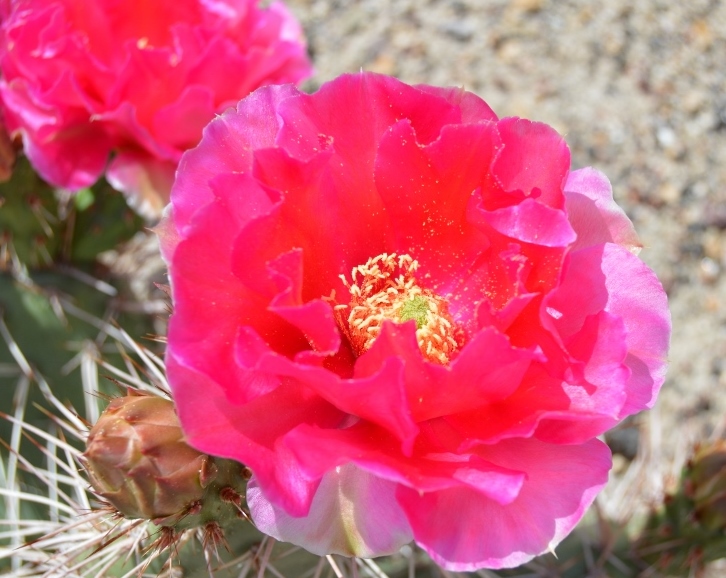
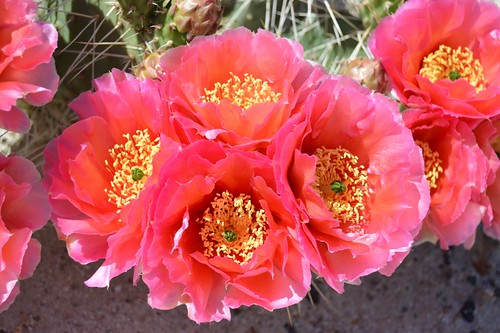
Flowers: Dark Pink, up to 4" across, late Spring to early Summer.
Growth Rate: Up to 12 vertical inches per year.
Native Habitat: Widespread in the southwestern USA. This form from Grant County, New Mexico.
Growers Comments: The size and color of the flowers are stunning on this large growing cholla. This form has characteristics of both C. imbricata and spinosior.
Buying Options: Size 1Grooted stem cutting, shipped bare root, for $9.50 each
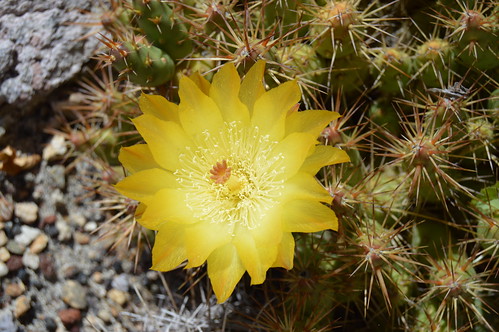
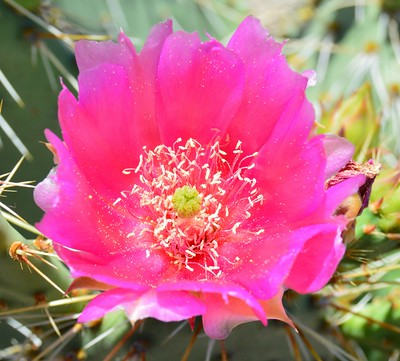
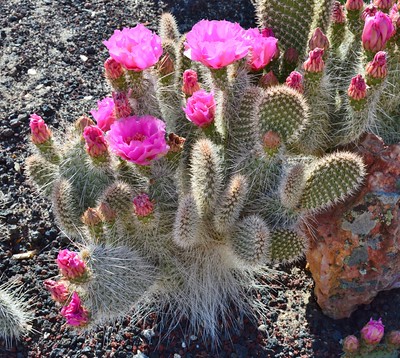
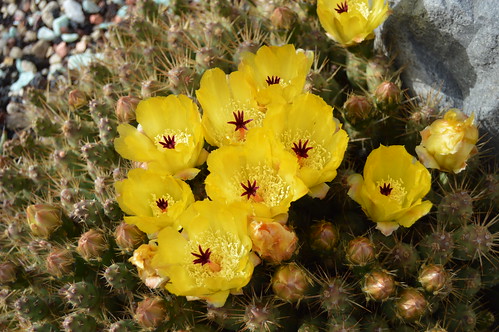
Echinocereus engelmannii var. chrysocentrus GS119.1
"Indian Strawberry Hedgehog Cactus"
Dimensions: 24" H x 36" W. Plants solitary at first, later offsetting to form large clusters.
Sun Exposure: Full Sun
Cold Hardiness: USDA Zones 10-5 ( - 20 F )
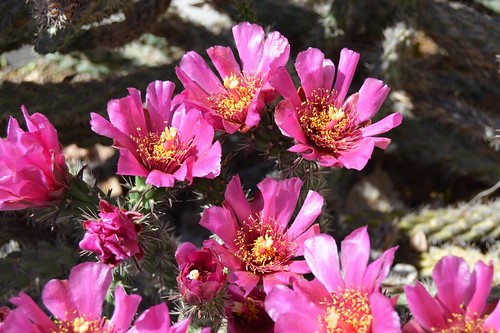
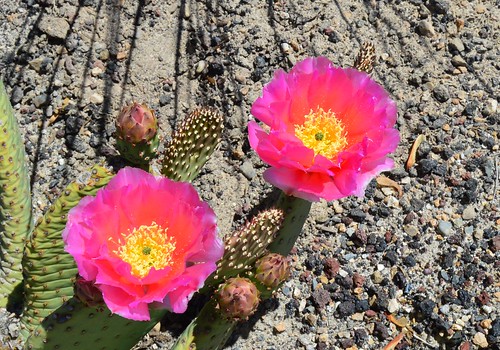
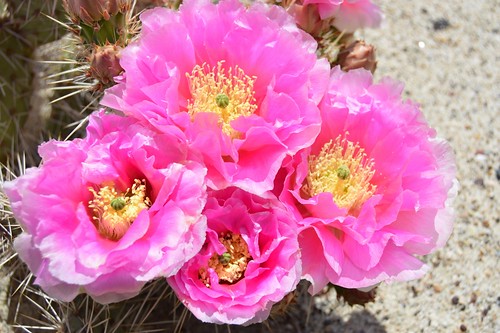
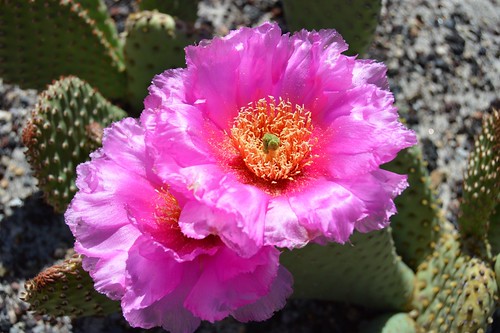
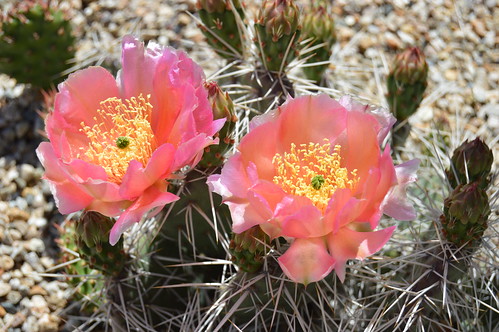
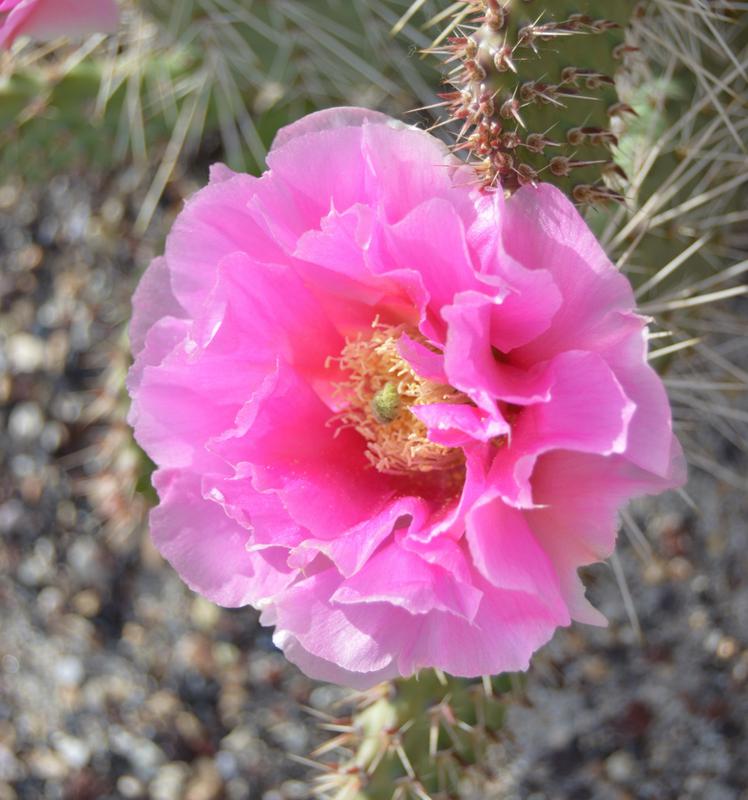
Flowers: Pink with reddish purple throats, up to 4" across in late Spring to early Spring
Pollinators: Bees
Growth Rate: Up to 2 vertical inches per year.
Native Habitat: Mojave Desert of California, Nevada and Arizona. This form from Lincoln County, Nevada.
Growers Comments: If you like cactus fruits, this is one of the best. The multi-colored spines of white to brown to golden brown are attractive when the plants are not in flower. Best when plants are kept extra dry.
Buying Options: Size 4L plants, shipped bare root, for $7.50 each.
Dimensions: 30" H x 12" W. Plants solitary at first, then slowly offsetting to form tall, few stemmed clusters.
Sun Exposure: Full to part sun. Plants can burn in full exposure.
Cold Hardiness: USDA Zones 10-6 ( -10 F )
Flowers: Light to dark pink, up to 4" across in late Spring to early Summer. Flowering apparently only happens on mature plants after many years of growing, in the 10-12 plus year range. I've yet to see any seedling plants flower. The gallon sized plants I offer are 7 years of age so should be close to flowering in a few more years.
Pollinators: Bees
Growth Rate: Up to 1 vertical inch per year.
Native Habitat: SE Arizona in juniper-pinyon or oak woodlands in rocky, sandy exposures or ridges at elevations above 4000 feet.
Growers Comments: This is a showy, high altitude, hedgehog cactus that has performed well in the test gardens. It does best when given some afternoon shade.
Buying Options: 1G size plants, shipped bare root for $9.50 each or 4S size new crop seedling plants, shipped bare root, for $5.50 each.
Dimensions: 24" H x 18" W. Plants solitary at first, later offsetting to from dense clusters.
Sun Exposure: Full Sun.
Cold Hardiness: USDA Zones 9-5 ( - 20 F )
Flowers: Silky pink, up to three inches in diameter appear in mid to late Spring. Plants can flower sporadically through the Summer if cool, wet weather persists..
Pollinators: Bees
Growth Rate: Up to 1/2 vertical inch per year.
Native Habitat: This form of reichenbachii is known mainly to occur in Oklahoma and northern Texas.
Growers Comments: This variety of reichenbachii has longer, shaggy spines that point outward from the plant body.
Buying Options: Size 4L plants, shipped bare root, for $7.50 each. Available with pure white, or rusty orange ( as in the photo to the left ) spined forms. In the PayPal window you can specify orange or white spined form.
Echinocereus triglochidiatus ( White Sands ) GS137.3
"White Sands Claret Cup Cactus"
Dimensions: 36" H x 48' W, Plants solitary at first, later offsetting to form large clusters.
Sun Exposure: Full Sun.
Cold Hardiness: USDA Zones 10-6 ( -10 F )
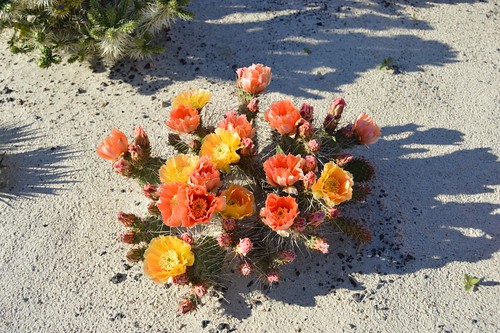
Flowers: Orange red with yellow throats, up to 3 inches across in late Spring to early Summer.
Pollinators: Hummingbirds and Bees.
Growth Rate: Up to 2 or more vertical inches per year.
Native Habitat: This form originally from the White Sands National Monument West of Alamogordo, New Mexico growing among stabilized sand dunes.
Growers Comments: This form of triglochidiatus is distinct with it's robust habit in both stem size and spine length. Probably should be considered as a subspecies. Plants handle extremes of sun, heat, and cold exposure very well.
Buying Options: Size 1G plants, shipped bare root, for $9.50 each.
Dimensions: 8" H x 12" W. Plants solitary at first, later offsetting to form dense clusters.
Sun Exposure: Partial. Provide plenty of afternoon shade for this grassland species.
Cold Hardiness: USDA Zones 9-4 ( -30 F and below )
Flowers: Vivid pink with light green or yellowish throats, up to 2 inches across, in a single flush in late Spring to early Summer.
Growth Rate: Up to 1/2 vertical inch per year. Most growth is sideways once the cactus begins to cluster.
Native Habitat: Widespread east of the Rocky Mountains from southern Canada to North Texas in sandy, flat areas among grasses.
Growers Comments: The most northerly of the genus, occurring into southern Canada. Also the least tolerant of full sun, so give it a semi shady spot in the garden. The fruits are excellent ( small grape size and taste like Kiwi ) and are the sweetest when picked after a light frost in the early Fall. Fruits are ripe when easily detached from the stem by pulling on the dried flower petals. Fruits are smooth skinned and can be eaten whole.
Buying options: Size 4L plants, shipped bare root, for $7.50 each.
Commonly called Cholla cactus, they are native to North America and are low to tall, shrub forming plants either dense or loosely branching. Many of them hybridize freely as well, making them a challenge for researchers like myself to type out properly, however some hybrid forms can be quite attractive and are worthy of cultivation. Sun Exposure: All listed plants are adapted for full sun and are not recommended for shady areas. Soil Type: Use Type 1 soil mixture. Visit the Introduction page for more information on soil types. Watering: Water only to establish in the first 1-2 years, drying completely between watering in late Spring to mid Summer. Pollinators: Bees. Maintenance: Prune to shape in late Summer as new growth matures. Wind can cause damage if the plants are not balanced properly during the pruning process. Invasive properties: Low. Plants are not prolific seeders but can spread by broken branches or stems snagging on passing animals. Traditional, Culinary or Medicinal Properties: Dried out branches have been used in making rain sticks and other various art pieces. I've even used dried branches as firewood in the Desert campfire.
Echinocereus
Commonly called "Hedgehog Cactus", these cacti are native to North America and have a great diversity in size, shape, and spine arrangement. Their slow growing nature typically restricts them to under story habitats where shade is more common than their larger counterparts, therefore most plants are not recommended for full sun exposure. For that reason I'll list the sun exposures for all listed plants individually. Soil Type: Type 1 soil mixture. Visit the Introduction page for more information on soil types. Watering: Water only to establish the first 1-2 years, drying completely between in mid Spring to mid Summer. Pollinators: With such a wide diversity among species, many forms have developed specific relationships with certain pollinators like hummingbirds or certain types of bees. For each listed plant, I'll retain which type of pollinator it attracts. Maintenance: One thing that's great about these plants is that their virtually maintenance free. Removing spent flowers and fruits are the only maintenance they require to keep them tidy in late Summer to early Fall. Invasive properties: Low to none. Traditional,Culinary or Medicinal Properties: Many hedgehog cacti have excellent strawberry like fruits that are ripened in the mid Summer sun and are usually ready by mid to late July when they easily detach from the main plant stem or begin to split among the sides. You'll need at least two plants to get cross pollination. The best hedgehog cacti for fruit production are varieties of coccineus, engelmannii, enneacanthus, fendleri, and stramineus.
Echinocereus lloydii GS124.1
"Lloyd's Hedgehog Cactus"
Dimensions: 30" H x 12" W. Plants solitary at first, then offsetting to form tall, few stemmed clusters.
Sun Exposure: Full Sun
Cold Hardiness: USDA Zones 10-6 ( -10 F )
Flowers: Variable in color, mostly orange but sometimes pink, green, or rusty red. Up to 4 inches across in late Spring to early Summer.
Pollinators: Hummingbirds and bees.
Growth Rate: Up to 1/2 vertical inch per year.
Native Habitat: Big Bend area of West Texas.
Growers Comments: A naturally occurring hybrid between Echinocereuscoccineus and dasyacanthus. Also synonymous with E. roetteri from New Mexico, however that form tends to have more coccineus like features ( more offsets and longer, needle like spines ) while lloydii tends to have more dasyacanthus like features with fewer off-sets and shorter spines.
Buying Options: Size 4S new crop seedlings, shipped bare root, for $5.50 each.
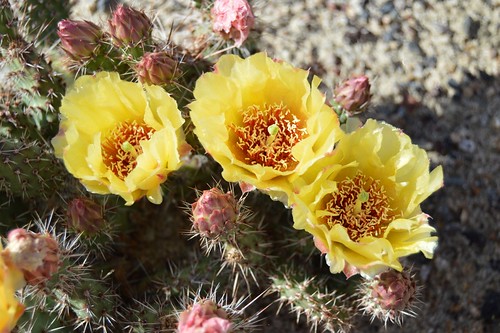
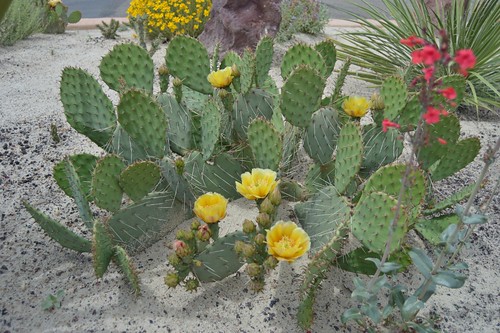
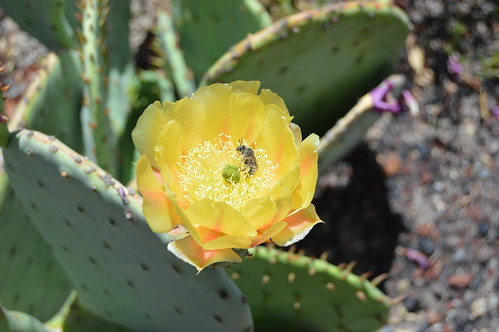
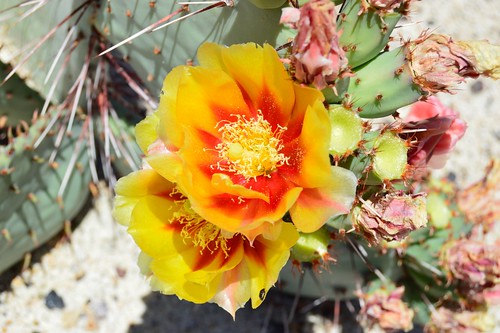
The most common and widespread in all the cactus family is the Opuntia, or more commonly known as, the "Prickly Pear". Native to North and South America, it comes in all shapes and various sizes. The cold hardy members of this species are typically smaller in stature than their more tropical relatives, but can become as wide in growth as the tropical forms are tall, so in terms of actual biomass, they can be equal in size. As I add more species to the list here, I will be dividing them into two groups, those being "Dry Fruiting Species", and "Flesh Fruiting Species", which describes the maturity of the fruit and the end of the current years growing cycle. In some species, the fruits shrink and dry up by the end of the Summer, where they fall off and tumble along the ground in the wind as their method of seed dispersion. In others, the fruits swell up and turn deep red or purplish in color, which attracts birds and rodents that eat the sweet fruits and seeds and disperse the seeds through their droppings. Some of these varieties are excellent for human consumption. Sun Exposure: With few exceptions, members of this species prefer full sun exposure. Soil Type: Use Soil Type 1. See Introduction page for more information on soil types. Watering: No watering is necessary unless your area is experiencing an extended or severe drought. Pollinators: Bees. Maintenance: Prune to shape when new growth pads reach maturity in late Summer to early Fall. Remove any mature fruits to keep tidy in early to mid Fall. Invasive Properties: Medium threat. Plants can spread into open, sandy, dry areas by seed or detached pads. Traditional, Culinary, or Medicinal Uses: Young, immature pads ( before spines develop ) are commonly called Nopalitos, are removed and cut into slices and can be used in fresh stir-fry's or are commonly made into cactus salsa. It has a slimy texture reminiscent of okra, which makes me wonder if someone's tried it in a gumbo recipe. Fleshy fruited varieties are best harvested when they easily detach from the pads in late Summer to early Fall.
Echinocereus roetteri GS144
Echinocereus russanthus "weedenii" GS136
"Torch Hedgehog Cactus"
Dimensions: 12"H x 4" W, Plants usually solitary or rarely offsetting.
Sun Exposure: Full Sun.
Cold Hardiness: USDA Zones 9-6 ( -10 F )
Flowers: Reddish brown, small, coming from the sides of the stem, only up to 1/4" across in mid to late Spring.
Pollinators: Bees
Growth Rate: Up to 1/2 inch per year.
Native Habitat: This form endemic to the Davis Mountains of West Texas.
Growers Comments: Numerous forms of russanthus have been discovered in the last few years in New Mexico and Texas in isolated colonies, and this one is no exception. The straw yellow spines make this an especially attractive form.
Buying Options: Size 4S new crop seedlings, shipped bare root, for $5.50 each.
Dimensions: 8" H x 12" W, Plants solitary at first, later offsetting to form dense clusters.
Sun Exposure: Full to part. This southern form of E. vivipara is tolerant of full sun but does best when given slight afternoon shade.
Cold Hardiness: USDA Zones 9-5 ( -20 F )
Flowers: Soft to bright pink, up to three inches across, up to three flushes beginning in late Spring and into late Summer, an adaptation to Summer monsoonal rain patterns.
Growth Rate: Up to 1/2 vertical inches per year.
Native Habitat: Texas and New Mexico
Growers Comments: This form is the most densely spined and is the best adapted to full sun.
Buying Options: Size 4L plants, shipped bare root, for $7.50 each.
Escobaria vivipara var. rosea GS158
"Great Basin Beehive Cactus"
Dimensions: 10" H x 15" W, Plants solitary at first, later offsetting to form dense, robust clusters.
Sun Exposure: Full to part. This form also tolerant of full sun, but does best when given some afternoon shade.
Cold Hardiness: USDA Zones 9-5 ( -20 F )
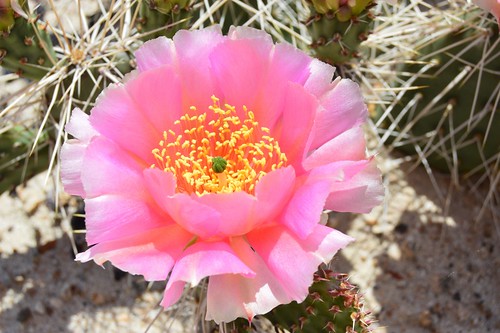
Flowers: Soft pink, up to three inches across in mid to late Spring.
Growth Rate: Up to 3/4 vertical inches per year.
Native Habitat: Primarily the Great Basin of Nevada and Utah. This the northern most form from Elko County, Nevada.
Growers Comments: This variety of vivipara is essentially a northern form of E. vivipara var. arizonica with large, robust stems and flowers. This form has flowers that have high contrasting green or yellow centered throats. Unlike var. arizonica, which has several flowering flushes through the Summer, var. rosea has only a single flush restricted to mid or late Spring.
Buying Options: Size 4L plants, shipped bare root, for $7.50 each.
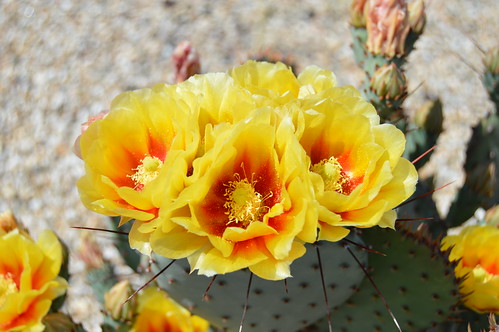
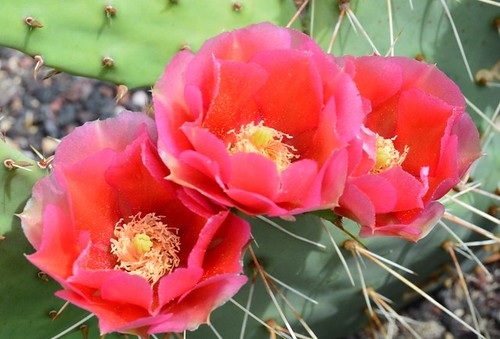
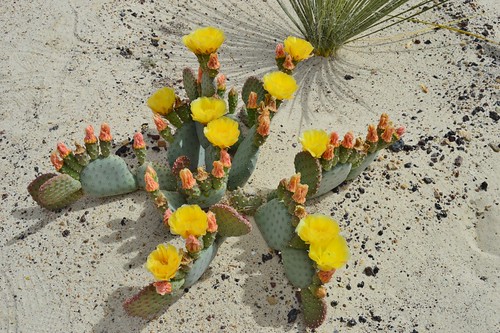
Opuntia aurea GS174 ( formerly listed as O. basilaris var. aurea )
"Yellow flowered Beaver Tail Cactus"
Dimensions: 10" H x 72" W, Plants form wide colonies. In cultivation their's almost no limit how big they can get.
Sun Exposure: Full Sun
Cold Hardiness: USDA Zones 9-5 ( -20 F )
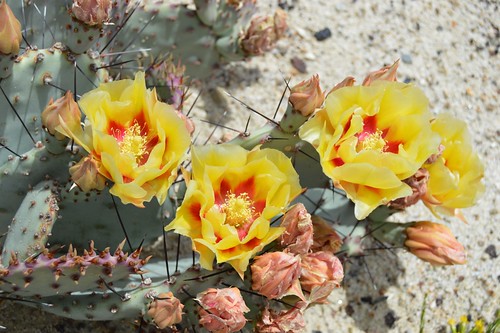
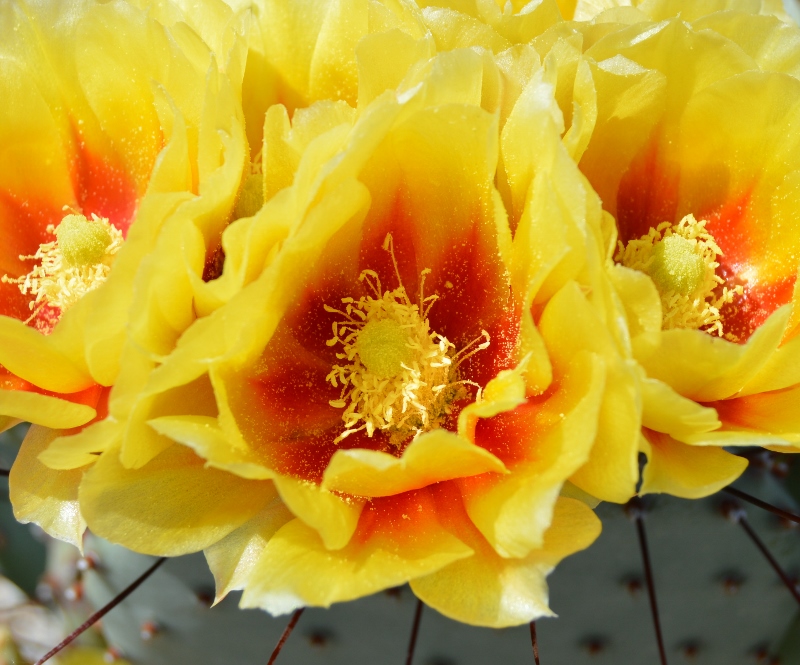
Flowers: Pure yellow fading to light orange, up to 3 inches across in mid to late Spring. Can flower into late Summer if given supplementary water. Fruits are dry at maturity.
Growth Rate: Fast, up to 24 inches per year, so give this cactus plenty of room.
Native Habitat: Southern Utah and northern Arizona, growing in pure sand.
Comments: This is the pure strain form with grey green chaining pads.
Buying Options: Size 4L rooted cutting, shipped bare root, for $7.50 each.
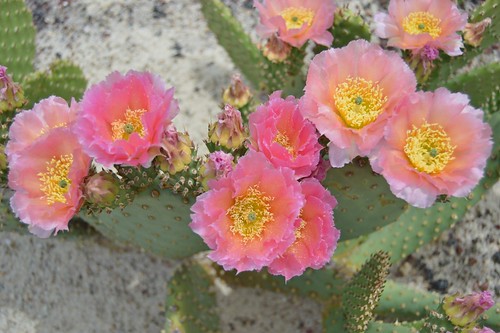
Opuntia erinacea var. ursina GS180.1
"Grizzly Bear Prickly Pear"
Dimensions: 36" H x 36' W, This is an upright growing prickly pear.
Cold Hardiness: USDA zones 9-6 ( -10 F ), This is the hardiest form yet tested.
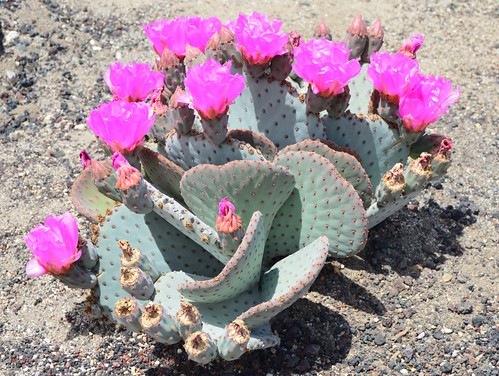
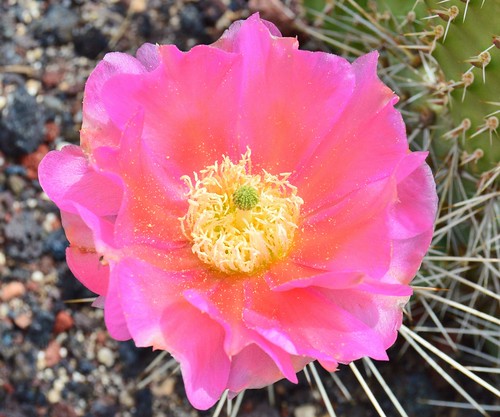
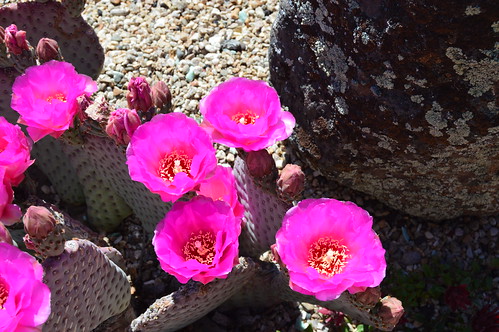
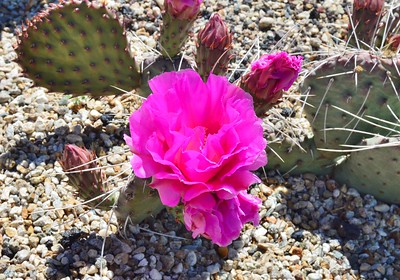
Flowers: Pure bright pink, up to three inches across in mid to late Spring. Fruits are dry at maturity.
Growth Rate: Up to six inches per year.
Native Habitat: Mojave Desert of California, Nevada, and Arizona. This form from Lincoln County, Nevada
Growers Comments: I've enjoyed growing this plant and studied it in habitat for many years. They are very moisture sensitive, so provide an extra coarse soil mixture and a more elevated position.
Buying Options: Size 4L rooted cutting, shipped bare root, for $7.50 each.
Geoscape Desert Nursery
1962 North Sparkling Place
Meridian, Idaho 83646
208-884-1251 ( Sun. - Tues. 9am - 7pm MST )
geodesert@yahoo.com
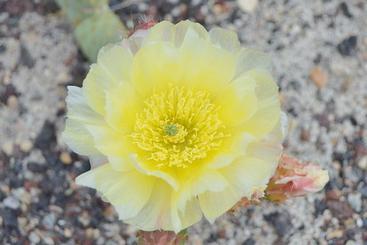
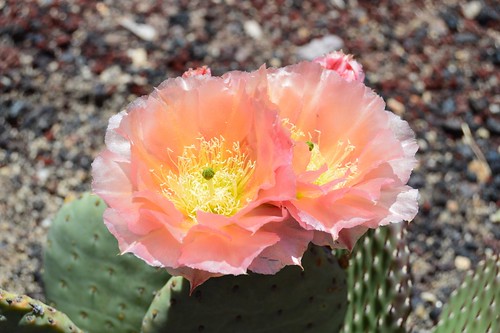
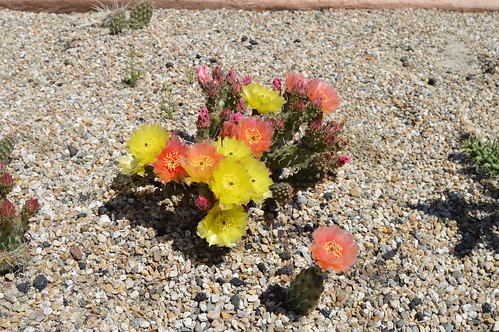
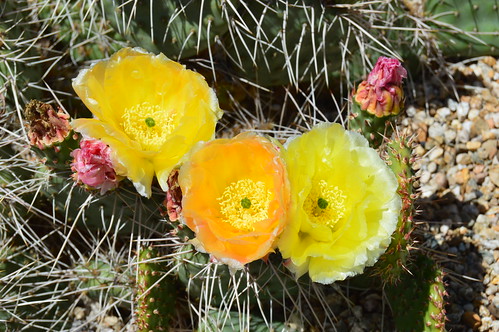
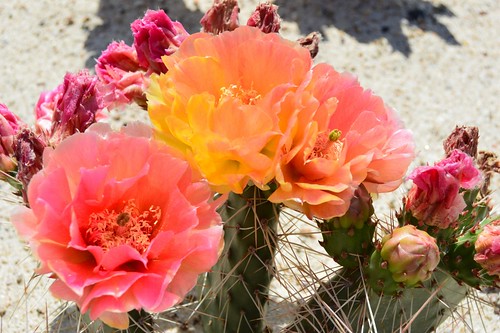
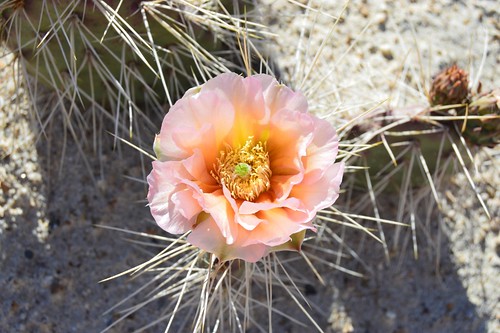
Columbia river prickly pear ( Opuntia columbiana ), this form with delicate salmon yellow flowers, discovered in Owyhee County, Idaho, May, 2011.
Escobaria
These small barrel cactus are solitary or can form small, compact clusters. Their widespread in habit, ranging from southern Canada down into central Mexico. Like the hedgehog cacti, they are relatively slow growing and are mostly restricted to under story habits, meaning they typically grow underneath other larger plants, and rarely grow in full sun exposure, especially at lower elevations. Most plants are ideal for container or trough gardens. Soil Type: Use Type 1 soil. For more information please visit the Introduction page. Watering: Water only to establish the first 1-2 years, drying completely in between. For Summer flowering species, water sparingly in drought years, drying completely in between from mid Spring to mid Summer. Pollinators: All listed species are pollinated by bees. Maintenance: Plants are relatively maintenance free. Remove any fruits at maturity, usually by late Summer to mid Fall. Invasive Properties: Low to none. Plants can seed heavily, but require special, undisturbed, conditions to spread. Traditional, Culinary or Traditional Uses: Varieties of Escobaria vivipara produce nice edible fruits that ripen in mid to late Fall when nights are cooler. The taste of the small, greenish, grape sized fruits, are similar to Kiwi.
Pediocactus
Native to the Intermountain West, these small barrel cacti are solitary or can form dense clusters and usually occur at elevations above 5000 feet in juniper-pinyon, or pine woodlands. In Colorado, some populations occur as high as 12000 feet or more in elevation. On the opposite end of the spectrum is Pediocactus nigrispinus. In Washington State it can occur as low as near sea level in populations along the Columbia River. Aside from P. nigrispinus, most species are sun burn sensitive, so give them a semi-shady spot in the garden if your elevation is lower than 5000 feet. Sun Exposure: Partial. Soil Type: Use Type 1 soil. Visit the Introduction page for more information on soil types. Watering: Water only to establish the first 1-2 years, drying completely between watering in early to late Spring. The flowering and growth cycle are restricted to Spring and early Summer and, in habitat, can be dormant by mid Summer, therefore supplementary watering is not recommended after Spring. Pollinators: Bees. Maintenance: Remove any dried fruits in mid to late Summer to keep tidy. Invasive Properties: Low to none. Traditional, Culinary, or Medicinal Uses: None recorded.
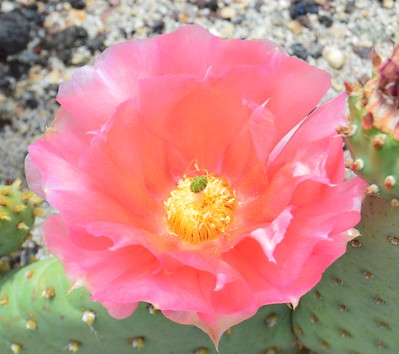
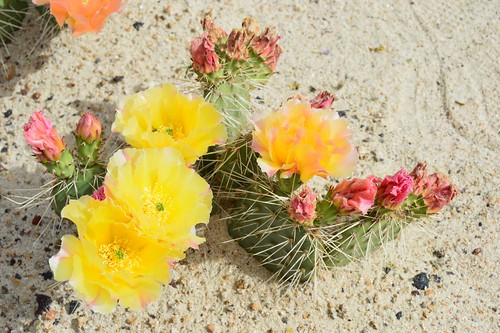
Spineless prickly pear ( Opuntia aurea x ) hybrid form in SW Utah. Many of these plants have hybrid characteristics borrowed from other species.
Opuntia sanguinicola.
Photo
coming
soon!
Cylindropuntia viridiflora GS108New for 2012!
No common name.
Dimensions: 48" H x 48" W
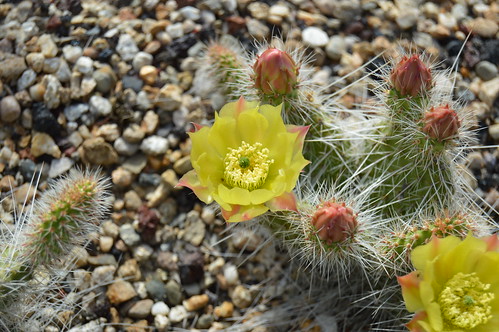
Flowers: Light orange with green centers, up to 3 inches across in late Spring to early Summer.
Growth Rate: Up to 4 vertical inches per year.
Native Habitat; An isolated population near Santa Fe, New Mexico.
Growers Comments: The light orange flowers are the feature of this showy C. whipplei relative.
Buying Options: Size 4L rooted stem cutting, shipped bare root for $7.50 each.
Echinocereus mojavensis GS126New for 2012!
"Mojave Claret Cup Cactus"
Dimensions: 15" H x 24" W, Plants solitary at first, then quickly offsetting to form dense, dome or helmet like clusters.
Sun Exposure: Full to part. This is a high altitude form which can burn in the afternoon sun, so do provide some light afternoon shade in hot,dry climates below 4000 feet.
Cold Hardiness: USDA Zones 9-5 ( -20 F )
Flowers: Deep red, up to two inches across in mid to late Spring.
Pollinators: Hummingbirds and bees.
Growth Rate: Up to 1/2 vertical inch per year.
Native Habitat: Widespread in SE California, Nevada and Utah at higher elevations above 4000 feet. This form originally from White Pine County, Nevada at an elevation of 6600 feet.
Growers comments: This is the true strain form with long twisting central and radial spines. The Utah forms of this plant have hybridized with coccineus and have shorter radials and central spines that are nearly straight. Those forms should be labeled as "utahensis". Further East into SW Colorado, these plants become nearly spineless and are officially recognized as variety "inermis".
Buying Options: Size 3G plants, shipped bare root for $17.50 each.
Escobaria vivipara var. arizonica GS155New for 2012!
"Arizona Beehive Cactus"
Dimensions: 8"H x 15"W. Plants are solitary at first, later off-setting to form dense clusters.
Sun Exposure: Full to part. This form has done well in near full sun exposure, but does best when given some afternoon shade.
Cold Hardiness: USDA Zones 9-5 ( -20 F )
Flowers: Pink to light pink, up to 3 inches across, in as many as three separate flushes beginning in late Spring into late Summer. For this variety, I recommend supplementary water if your Summer conditions are dry to encourage and extend the naturally longer flowering cycle, drying completely in between.
Growth Rate: Up to 1/2 vertical inch per year. As plants begin to cluster, most growth becomes sideways.
Native Habitat: Central to northern Arizona and western New Mexico mostly at elevations above 5000 feet on rocky exposures or ridges in juniper-pinyon, or oak woodlands. This form from Graham County, Arizona.
Growers Comments: Difficult to distinguish from var. rosea occurring further North in Utah and Nevada. About the only way to tell is how the plants flower, where arizonica can have multiple flowering flushes and rosea with only a single flush.
Buying Options: Size 4L plants, shipped bare root, for $7.50 each.
Opuntia sanguinicola GS179New for 2012!
No common names recorded
Dimensions: 24"H x 72" W. This is a large padded prickly pear that can spread quickly.
Cold Hardiness: USDA Zones 9-6 ( -10 F ), probably colder.
Flowers: Yellow, up to 3 inches across, in late Spring to early Summer. Fruits fleshy at maturity, but are small and not recommended for consumption.
Growth Rate: Fast, up to 24 inches per year.
Native Habitat: Primarily Oklahoma and North Texas. This is the Glass Mountains form from Oklahoma.
Growers Comments: This is a nice, large showy Opuntia with only a few reddish brown spines restricted to the distil ( top ) end of each pad. An excellent plant if you have plenty of room for it to spread.
Buying Options: Size 1G rooted cutting, shipped bare root, for $9.50 each.
Dimensions: 12"H x 24" W, Plants are solitary at first, later offsetting to form dense, rounded clusters.
Sun Exposure: Full to part. Plants do best when given some afternoon shade.
Cold Hardiness: USDA Zones 9-5 ( -20 F )
Flowers: Silky pink, up to three or more inches across in mid to late Spring.
Pollinators: Bees.
Growth Rate: Up to 1/2 inch per year. Most growth becomes sideways when plants begin to cluster.
Native Habitat: Widespread East of the Rocky Mountains in Great Plains Grasslands, as far North as Colorado and South into northern Mexico, growing in elevated, sandy or rocky exposures.
Growers Comments: This form has attractive multicolored spines of white, brown, and rusty orange.
Buying Options: Size 4L plants, shipped bare root, for $7.50 each.
Photo
coming
soon!
Photo
coming
soon!
Photo
coming
soon!
Sold out! I should have more cuttings ready by mid Summer.